
In-home care
Safe transferring assistance
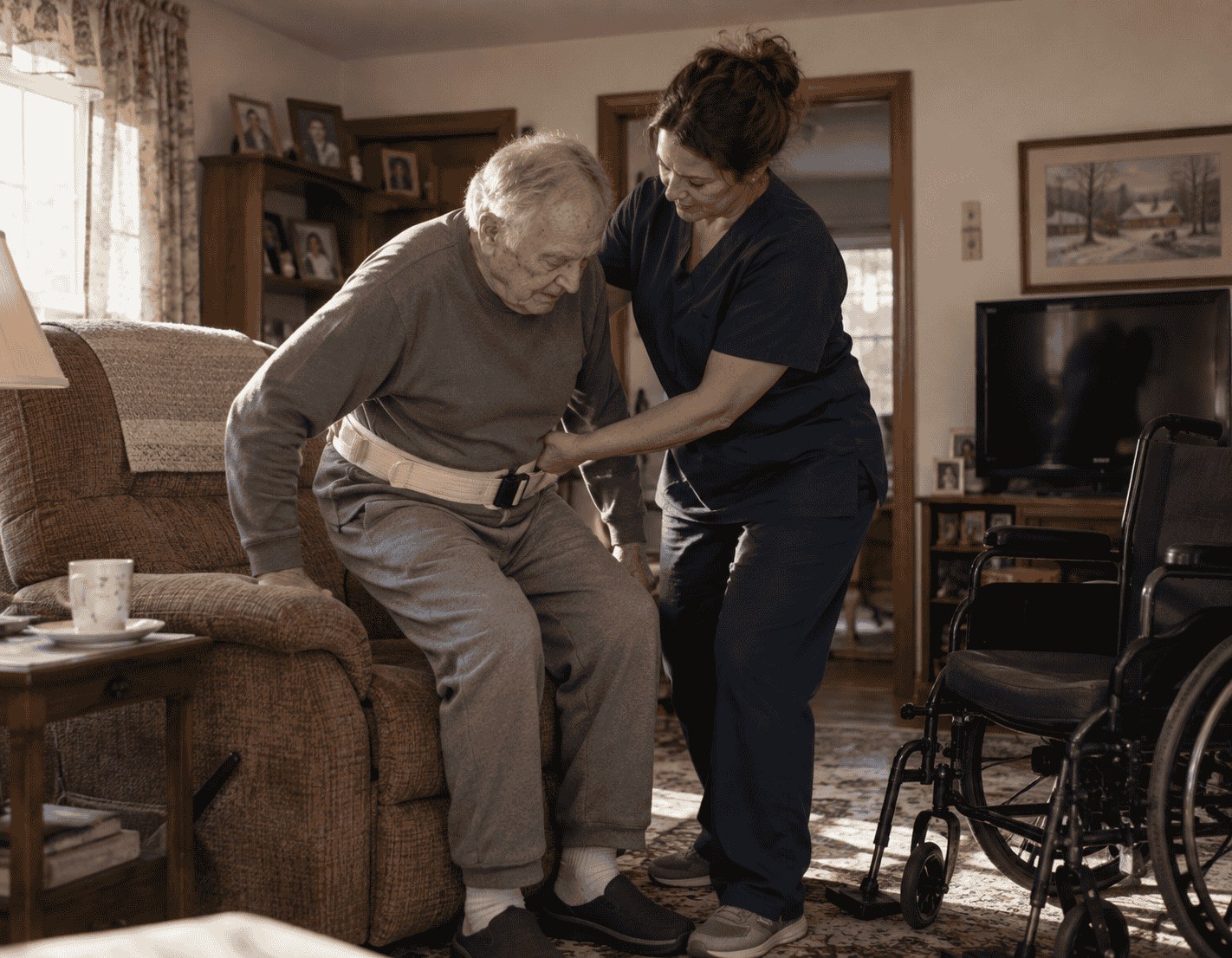
Physically moving from one surface to another — bed to wheelchair, wheelchair to scooter, chair to standing. It sounds minor. It is where a large share of serious injuries happen, to the person being moved and to the family member doing the moving.
When to call
Signs it may be time for help
Needing to pull on furniture to stand
A recent fall, or a near-fall
The family caregiver has hurt their own back helping
Difficulty getting off a low sofa or toilet
Discharge home after a hospital stay or surgery
Sliding down in a chair and being unable to reposition
What our caregivers do
What a visit includes
Trained transfer technique
Proper body mechanics, gait belts where appropriate, never dragging under the arms.
Equipment use
Comfortable working with wheelchairs, walkers, scooters, transfer boards and lifts.
Repositioning
Regular position changes for anyone spending long periods seated or in bed, to prevent pressure sores.
Home assessment
Spotting the rug, the low chair, the missing grab bar that is causing the problem.
Protecting the family caregiver
A significant share of our clients come to us because a spouse or adult child injured themselves helping.
Common questions
Questions families ask about this
Can you help after a hip replacement or stroke?
Yes, alongside any physical therapy programme. We support the plan, we do not replace it.
Ready when you are. No pressure, no cost to talk.
One call. We listen, we visit the home, and you get a written plan before anything starts.