
In-home care
Bathing & dressing assistance
This is usually the hardest conversation a family has. Most people would rather struggle alone than be washed by their own child — and often it is easier to accept help from a trained caregiver than from a son or daughter.
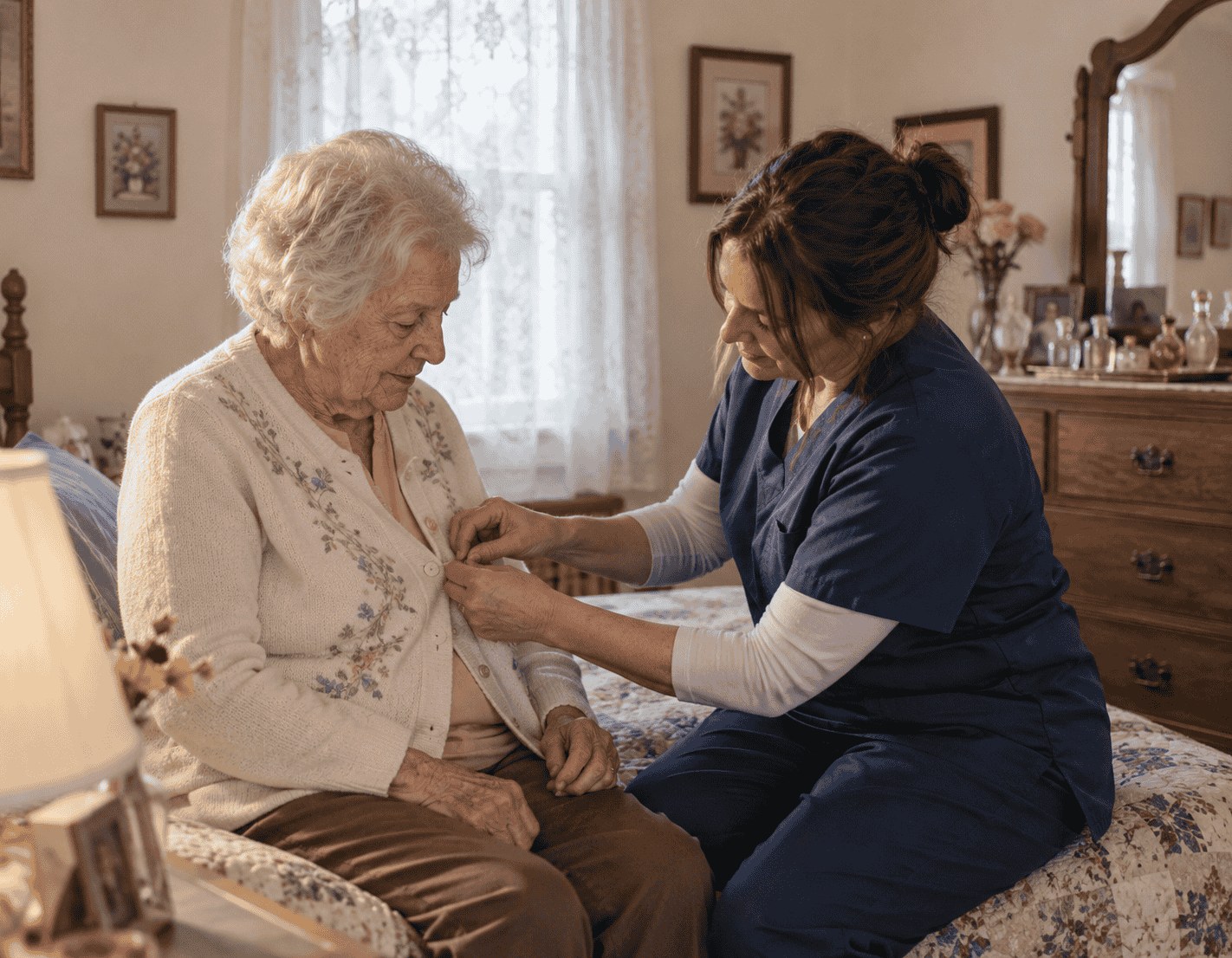
We assist clients with personal hygiene needs while respecting their dignity and promoting independence.
When to call
Signs it may be time for help
Skipping baths, or wearing the same clothes several days running
Unsteadiness getting in or out of the tub
A near-fall in the bathroom
Difficulty with buttons, zips or shoes
Noticeable change in grooming or personal hygiene
Avoiding the bathroom because it feels unsafe
What our caregivers do
What a visit includes
Assist, not take over
The client does whatever they can still do themselves. Independence is protected, not replaced.
Bathing and showering
Including transfer in and out, with attention to water temperature and slip risk.
Grooming
Hair, shaving, oral care, nails.
Dressing
Appropriate to the weather and to what the person actually likes to wear.
Skin checks
Noticing redness, bruising or breakdown early and reporting it.
Privacy first
Doors closed, towels used properly, no unnecessary exposure. This is non-negotiable.
The bathroom is where most falls at home happen. Having someone present is often the single highest-value hour of the week.
Common questions
Questions families ask about this
Can we request a caregiver of the same gender?
Yes, and most families do. Tell us at the assessment.
How long does a typical visit take?
Personal care visits usually run one to two hours.
Ready when you are. No pressure, no cost to talk.
One call. We listen, we visit the home, and you get a written plan before anything starts.